Driving Through Milan’s Hidden Vistas: A Local’s View You Won’t Believe
You know that feeling when you’re behind the wheel and suddenly, the city unfolds like a secret only you’ve discovered? That’s exactly what happened when I drove through Milan—not just the crowded Duomo crowds, but real, breathtaking viewpoints most tourists miss. Self-driving gave me freedom, timing, and access to elevated rooftops, quiet canals, and golden-hour panoramas few ever see. This is Milan like you’ve never imagined. Away from the rigid schedules of trains and buses, I found myself moving with the rhythm of the city, turning down quiet streets at dawn, pausing where the light hit the rooftops just right, and discovering corners of Milan that feel untouched by tourism. It wasn’t just a trip—it was a revelation.
Why Driving Changes Your Perspective on Milan
When most travelers think of Milan, they picture the Duomo, the Galleria, and perhaps La Scala—iconic, yes, but often seen from the same vantage points as thousands before them. What driving offers is a fundamental shift in perspective: the ability to move beyond the postcard views and explore Milan as a layered, evolving city. Public transportation in Milan is efficient, but it follows fixed routes and timetables, limiting spontaneity. By contrast, having a car means you can leave the city center behind and discover areas that lie just beyond the typical tourist radius—places like the quiet residential districts near Porta Volta or the industrial-chic neighborhoods along the old railway lines, where street art blooms on brick walls and local cafés serve cappuccino the way Milanese families enjoy it.
The flexibility of self-driving becomes especially valuable when chasing the perfect light or avoiding crowds. Imagine arriving at a landmark just as the morning mist lifts, or pulling over to photograph a sun-drenched piazza before the tour groups arrive. With a car, you control the timing. You can take scenic detours—like looping around the eastern edge of the city where the urban landscape gives way to green belts and small vineyards—without worrying about missing the last metro. Real-time navigation apps make this even easier, offering live traffic updates and alternative routes that lead to unexpected discoveries, such as a hidden park tucked between apartment buildings or a centuries-old church with an open courtyard rarely listed in guidebooks.
Moreover, driving allows you to carry what you need for a full day of exploration: a picnic blanket, comfortable walking shoes, a camera with extra batteries, even a change of clothes for an evening out. This level of preparedness enhances the experience, turning each outing into a personalized journey rather than a checklist of sights. For women in their 30s to 50s—many of whom are used to planning family trips or balancing multiple responsibilities—this sense of control and independence can be deeply satisfying. It’s not just about seeing more; it’s about experiencing the city on your own terms, with the quiet confidence that comes from knowing you’re navigating it your way.
The Duomo Rooftop Drive-Up Moment
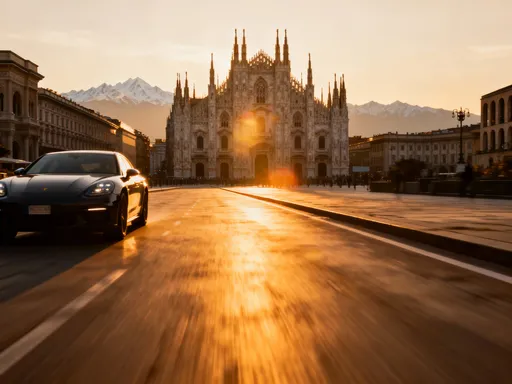
No visit to Milan is complete without seeing the Duomo, but most tourists experience it from ground level, craning their necks amid the crowds. Those who climb to the rooftop terraces are rewarded with one of Europe’s most spectacular views—but few consider arriving by car. Driving to the Duomo early in the morning transforms the experience entirely. By parking in a nearby garage just after sunrise, I avoided the midday queues and stepped into an almost sacred stillness. The marble spires rose like frozen lace against a pale blue sky, and the first rays of sunlight caught the golden statue of the Madonna at the summit, making her glow like a beacon.
From the rooftop, the city spreads out in every direction like a living map. To the north, the faint outline of the Alps appears on clear days, a reminder of Milan’s proximity to the mountains. The intricate network of streets and piazzas becomes visible in a way that’s impossible from below. You can trace the arc of the Galleria Vittorio Emanuele II, spot the sleek lines of the Unicredit Tower, and see how the historic center blends with modern developments. What’s most striking, though, is the craftsmanship up close—the thousands of statues that adorn the façade, each with its own expression and story, and the delicate stonework that has withstood centuries of weather and change.
Arriving by car made it possible to time this moment perfectly. I had the freedom to wait for ideal lighting, to bring a light breakfast to enjoy on a bench near the entrance, and to leave when I chose, without feeling rushed. For many women who travel to recharge and reflect, moments like this offer more than just a photo opportunity—they provide a sense of peace and clarity. Standing above the city, with the morning breeze on your face and the hum of waking Milan below, you feel both small and significant, part of something timeless. It’s a feeling that stays with you long after you’ve returned to the ground.
Navigating the Navigli District by Car and Foot
The Navigli district, with its network of historic canals, is one of Milan’s most charming areas, beloved for its bohemian atmosphere, vibrant nightlife, and weekend markets. Yet many visitors struggle to find parking or arrive too late to appreciate its daytime tranquility. Driving to Navigli and parking on the quieter streets just outside the main canal zone allows you to enter the district on your own terms. I chose to arrive in the late afternoon, when the sun slants across the water and the houseboats tied along the banks cast long reflections. The colorful 19th-century buildings, painted in ochre, terracotta, and soft blue, seemed to glow.
Walking into the heart of Navigli, I passed vintage shops selling retro records and handmade jewelry, small galleries with local art, and cafés where elderly men played chess under striped awnings. The famous Fossa Interna, the main canal, was lined with restaurants beginning to set up for evening aperitivo, but at that hour, it was still peaceful. I lingered at a small bookstore specializing in rare Italian editions, then stopped for a gelato at a family-run shop known for its seasonal flavors—fig and honey, rosemary and lemon. The ability to park nearby meant I could return to the car with shopping bags, or simply relax on a bench and watch the light shift over the water.
Returning to Navigli at sunset is where the magic truly unfolds. By driving back just before dusk, I avoided the evening traffic and found a spot in a secure garage a five-minute walk from the canal. As twilight fell, the lights along the water flickered on, and the air filled with the scent of grilled vegetables and wine. Open-air bars spilled onto the sidewalks, and live music floated from hidden courtyards. But unlike the typical tourist who arrives by crowded tram, I had the advantage of timing—leaving when the crowds peaked, or staying late without worrying about transportation. For women who value both connection and personal space, Navigli offers the perfect balance: a place to be part of the city’s rhythm while still maintaining your own pace.
Sforza Castle and the Surrounding Park Experience
Parco Sempione, one of Milan’s largest green spaces, unfolds like a breath of fresh air after the city’s busy streets. Driving there in the early morning, I watched as the towers of Sforza Castle emerged from behind a curtain of trees, its medieval walls standing in quiet contrast to the modern city around it. The castle, once a Visconti fortress and later a ducal residence, now houses several museums, but it’s the park itself that offers the most intimate experiences. Few guided tours linger here long, and even fewer visitors explore beyond the main pathways. With a car, I could arrive early, park conveniently, and wander into the quieter corners where families walk their dogs, artists sketch by the fountains, and elderly couples sit on benches reading newspapers.
I brought a picnic—fresh bread, local cheese, and a bottle of sparkling water—and found a spot beneath a chestnut tree with a clear view of the castle’s crenellated towers. There’s something deeply grounding about eating outdoors in a historic park, surrounded by centuries-old trees and the soft murmur of city life at a distance. After lunch, I walked along the ramparts, where the stone feels cool even in summer, and looked down into the moat, now a garden filled with lavender and rosemary. The contrast between the fortress’s military past and its current role as a cultural haven is striking.
For women who travel to reconnect—with themselves, with nature, or with companions—Parco Sempione offers a rare sense of calm. The ability to drive there means you can bring everything you need for a full morning or afternoon: a book, a blanket, a camera. You’re not constrained by metro schedules or the need to rush back to a hotel. Instead, you can linger, observe, and absorb the atmosphere at your own pace. And when you’re ready to leave, your car is there, waiting—a private sanctuary in a city that never stops moving.
The Hidden Lookout at Torre Branca
Tucked within Parco Sempione but often overlooked, Torre Branca is a 100-meter steel tower designed by architect Gio Ponti in the 1930s. Unlike the Duomo’s rooftop, which draws thousands daily, Torre Branca remains a quiet gem, accessible by a short walk from the castle but rarely included in standard itineraries. Driving to the park and parking nearby made it easy to include this stop without adding stress. The ascent—by elevator—is swift, and the panoramic view from the top is nothing short of extraordinary.
From this vantage point, Milan reveals its contrasts in a single frame. To the west, the industrial zones stretch out, a testament to the city’s role as Italy’s economic engine. To the east, modern skyscrapers like the Bosco Verticale (Vertical Forest) rise with their lush green facades, blending architecture and nature. Below, the historic center pulses with life, while the Alps form a distant backdrop on clear days. What’s most remarkable is the sense of scale—seeing how the city layers its past and present, from medieval walls to contemporary design.
Few tourists come here, and that’s part of its charm. There’s no jostling for space, no long lines—just a quiet observation deck where you can take your time, adjust your camera settings, and truly absorb the view. For those who appreciate thoughtful design and understated beauty, Torre Branca is a revelation. And because it’s so close to other attractions, driving allows you to combine it seamlessly with a visit to the castle or a walk through the park. It’s not just a viewpoint; it’s a perspective—one that reminds you how much there is to see when you’re willing to look beyond the obvious.
Day Trip Options: Lakes Como and Maggiore Within Reach
One of the greatest advantages of driving from Milan is the ability to explore the Italian lakes in a single day. Located within a two-hour drive, Lake Como and Lake Maggiore offer dramatic alpine scenery, elegant villas, and lakeside towns that feel a world away from the city. Without a car, these destinations require multiple transfers and rigid schedules, often limiting your time on-site. With a rental vehicle, however, you can leave early, arrive at a quiet lakeside village by mid-morning, and spend hours exploring at your leisure.
Lake Como, with its Y-shaped expanse and celebrity-owned villas, is famous for its beauty. Driving there, I took the scenic route through the hills, passing small vineyards and stone farmhouses. I parked in the town of Varenna, less crowded than Bellagio but equally charming, with narrow lanes, flower-filled balconies, and a lakeside promenade perfect for a long lunch. I visited the 11th-century Castello di Vezio, accessible by a gentle hike from the waterfront, and stood at its tower watching boats glide across the water. The entire experience felt unhurried, intimate—something that would have been difficult on a packed tour bus.
Lake Maggiore, slightly farther west, offers a wilder, more natural landscape. The Borromean Islands, reachable by ferry from Stresa, are home to opulent baroque gardens and historic palaces. But even without taking the boat, the lakeside towns are worth exploring—especially Locarno on the Swiss side, where Italian and Swiss cultures blend seamlessly. Driving allows you to cross the border with ease (with proper rental documentation), experience both countries in one trip, and return to Milan in time for dinner. For women who seek both beauty and independence, these day trips are not just excursions—they’re affirmations of freedom and curiosity.
Smart Driving Tips for a Smooth Milan Experience
While driving in Milan offers unmatched freedom, it does require some preparation. The city enforces ZTL (Zona a Traffico Limitato) zones—low-emission areas where unauthorized vehicles are fined. These zones cover much of the historic center, including areas around the Duomo and Sforza Castle. To avoid penalties, it’s essential to check whether your rental car is ZTL-compliant and to use official parking garages outside restricted areas. Many hotels and attractions provide codes or permits for short-term access, so always confirm in advance.
Using parking apps like MyCicero or EasyPark can simplify the process, allowing you to reserve spots, pay digitally, and receive real-time updates on availability. Major attractions often have underground garages—such as the one beneath Piazza Duomo or near the Navigli docks—that are secure and convenient. Timing is also crucial: entering the city before 8 a.m. or after 7 p.m. helps avoid rush-hour congestion, especially on ring roads like the Tangenziale.
Responsible driving enhances the experience. Milan is a dense urban environment, and pedestrians, cyclists, and scooters are everywhere. Staying alert, respecting traffic rules, and using turn signals consistently not only ensures safety but also reduces stress. For women traveling alone or with family, feeling confident behind the wheel is key to enjoying the journey. With the right preparation, driving in Milan becomes not a challenge, but a privilege—one that opens doors to hidden vistas, quiet moments, and a deeper connection to this vibrant city.
In the end, driving through Milan is about more than convenience. It’s about reclaiming the joy of discovery, about seeing a familiar destination with fresh eyes. It’s the early morning light on the Duomo’s spires, the quiet reflection of Navigli’s canals at dusk, the panoramic sweep of the city from Torre Branca, and the alpine sparkle of Lake Como—all made possible by the simple act of turning the key. For women who value independence, beauty, and meaningful experiences, self-driving offers a rare gift: the freedom to explore not just Milan, but the version of it that speaks most deeply to you.