Flavors of the Festival: Eating My Way Through Ella’s Hidden Food Celebrations
You know that feeling when you stumble upon a local festival no travel blog ever told you about? That’s exactly what happened in Ella, Sri Lanka. I wasn’t just chasing views of lush hills and misty trails—I was hunting down flavors. From steaming kottu at roadside stalls to sweet wattalapam served during village festivities, Ella’s festival culture is packed with edible stories. This is more than food; it’s tradition, joy, and community served on a banana leaf. Let me take you where the real feast begins.
Arrival in Ella: First Bites and Unexpected Festivities
The train from Kandy slows as it approaches Ella, winding through emerald tea plantations and mist-cloaked ridges. Stepping onto the platform, the cool mountain air carries more than just the scent of damp earth and eucalyptus—it brings the unmistakable aroma of cumin, chili, and coconut roasting over open flames. Vendors in bright saris arrange pyramids of ripe mangoes and jackfruit, while the clatter of steel pots echoes from makeshift food stations tucked beside stone walls. It was my first visit to Sri Lanka’s hill country, and I had no idea I’d arrived during a local temple festival celebrating the season’s first harvest.
The festival, known locally as a perahera, was not listed on any major tourism calendar. It began quietly—drums echoing in the early morning, children balancing oil lamps on their heads, and families laying out banana leaves beneath banyan trees. What struck me most was how quickly food became the heartbeat of the celebration. Women in crisp cotton sarees stirred massive cauldrons of rice and lentils, while elders blessed clay pots filled with spicy curries before they were passed to waiting hands. These were not restaurant dishes; they were recipes passed down for generations, cooked only during moments like this—when gratitude for the land’s bounty demanded expression through flavor.
Timing a trip around such events transforms a simple journey into something deeper. While Ella is famous for its panoramic views and the Nine Arch Bridge, the true richness of the region reveals itself during these spontaneous gatherings. Festival foods like spicy achcharu pickles, coconut-laced sweets, and slow-cooked meat curries are rarely found in urban markets or hotels. They appear only when communities come together to honor seasonal rhythms and spiritual milestones. For travelers, this means access to culinary traditions that can’t be replicated—dishes born of ritual, memory, and shared effort. The experience is fleeting, yes, but all the more precious for it.
The Heartbeat of Festival Culture: Food as Tradition
In the villages surrounding Ella, food is far more than sustenance—it is language, memory, and faith made tangible. During festivals, every dish carries meaning, every ingredient a symbol. Take kiribath, the creamy milk rice often served at the start of celebrations. More than just a breakfast staple, it marks new beginnings. Prepared at dawn and offered first to the temple, then shared among families, kiribath embodies purity and prosperity. Its smooth texture and delicate sweetness are a reminder of life’s blessings, carefully measured and deeply appreciated.
Then there are kokis—crisp, snowflake-shaped sweets made by pressing rice flour batter into hot iron molds. These golden treats appear during harvest festivals and religious observances, their intricate patterns reflecting the care and artistry poured into the occasion. They are often served alongside wattalapam, a rich custard made with coconut milk, jaggery, and cardamom. Once reserved for special temple offerings, wattalapam now graces home tables during celebrations, its silky layers a metaphor for the blending of tradition and family.
Equally significant are savory dishes like jackfruit curry and pol sambol, a fiery coconut relish. Jackfruit, abundant in Sri Lanka’s tropical climate, is slow-cooked with mustard seeds, pandan leaves, and roasted curry powder until it melts on the tongue. It represents resilience and abundance, a fruit that thrives with little intervention. Pol sambol, mixed fresh at each gathering, brings heat and brightness to the meal, symbolizing energy and vitality. These dishes are never made in isolation. They are prepared in groups—women grinding spices, men tending fires, children folding banana leaves into plates. The act of cooking becomes a ritual of unity, reinforcing bonds that stretch across generations.
What makes these traditions endure is not just taste, but transmission. Elders teach the young how to balance flavors, how to time the simmer of a curry, how to offer food with both hands as a sign of respect. In a world where fast food and convenience often dominate, Ella’s festival meals stand as a quiet resistance—a reminder that some things cannot be rushed, that nourishment includes not just the body, but the soul.
Street Eats with a Story: What to Eat During Ella’s Festivals
If you wander the festival lanes of Ella during a celebration, your senses will be overwhelmed in the best possible way. The air hums with the sizzle of iron skillets, the tang of lime and tamarind, and the earthy sweetness of palm sugar caramelizing over charcoal. This is where street food becomes storytelling, each bite carrying a chapter of local life. One of the most exciting finds is achcharu, a spicy-sour pickle made from green mango, pineapple, or carrot, tossed with mustard oil, chili, and fenugreek. Served in small paper cones, it’s handed out like candy—bright, bold, and impossible to eat just once.
Another festival-exclusive treat is pani walalu, a dense coconut candy bound with jaggery and flavored with cardamom. Unlike the mass-produced sweets sold in tourist shops, pani walalu is made in small batches during celebrations, cooked in open vats until the mixture reaches the perfect chew. Vendors pour it onto banana leaves, where it cools into irregular slabs, then break it into rustic chunks. Eating it is a tactile experience—the way it sticks slightly to your fingers, the way the jaggery deepens in flavor as it warms in your mouth. It’s not just a dessert; it’s a piece of heritage, sweetened with patience and care.
Then there’s kottu roti, the rhythmic clanging of which becomes the soundtrack of nightfall. Cooks chop flatbreads, vegetables, and sometimes egg or chicken on a hot griddle, their movements synchronized like a dance. The result is a savory, slightly charred medley that’s both filling and deeply satisfying. During festivals, kottu is often made in larger portions and shared among groups, passed on metal trays or banana leaves. It’s food meant for company, for laughter, for lingering long after the plate is empty.
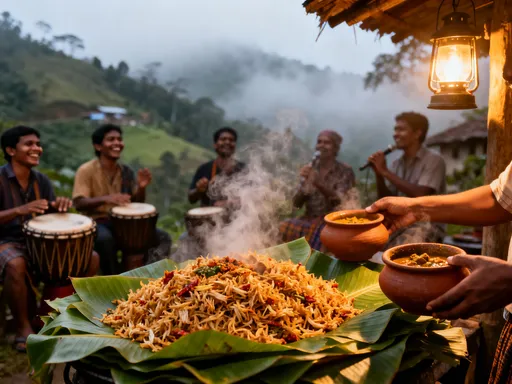
One of the most memorable dishes I encountered was clay pot curry. Slow-cooked over wood fires, these curries—often made with chicken, goat, or jackfruit—develop a depth of flavor that metal pots can’t replicate. The porous clay absorbs smoke and spice, infusing the meat or vegetables with layers of complexity. When the lid is lifted, steam rises like incense, carrying the scent of cinnamon, curry leaves, and slow time. Served with steamed rice or string hoppers, it’s a meal that demands presence, not just appetite.
Serving styles enhance the experience. Banana leaves are not just plates—they are part of the ritual. Their natural wax coating keeps food warm, their subtle aroma blends with the meal, and their biodegradability reflects a deep respect for nature. Some foods are wrapped in paper or banana stems, carried easily through crowded lanes. Others are handed directly from cook to guest, a gesture of trust and generosity. In these moments, eating becomes an act of connection, not consumption.
Where the Locals Eat: Off-the-Beaten-Path Festival Spots
To truly taste Ella’s festival culture, you must step beyond the main roads and tourist cafes. The most authentic gatherings happen in places without names—small village temples shaded by centuries-old trees, community halls with cracked plaster walls, or temporary enclosures set up near railway tracks where families gather after evening prayers. These are not staged for visitors; they exist because the community needs them, because celebration is woven into daily life.
One such spot I discovered was a modest temple on the outskirts of Ella village. No signs pointed the way, but the sound of drums and the trail of oil lamps led me there. Inside the courtyard, women served meals from long tables covered in banana leaves. There were no menus, no prices—only the quiet understanding that if you came with respect, you were welcome to eat. I stood in line with local families, waiting my turn as steaming portions of rice, dhal, and vegetable curry were served with a smile. No one spoke much, but the shared silence felt warm, inclusive.
Respect is essential in these spaces. Dressing modestly—shoulders covered, skirts or pants below the knee—is not just polite; it’s expected. Removing shoes before entering temple grounds is a sign of humility. And when food is offered, accepting it with both hands, or at least the right hand, shows gratitude. Even a simple nod or smile can bridge language gaps. These gestures matter, not because they follow rules, but because they signal that you are not just observing, but participating.
Blending in doesn’t mean losing yourself—it means opening up. I learned to eat while standing, balancing my leaf-plate in one hand, using my fingers to mix rice with curry. At first, it felt awkward, but soon it became natural. I watched children do it effortlessly, their small hands shaping perfect morsels. An elder noticed my attempts and chuckled, showing me how to tuck the thumb in while eating—a small tip that felt like an honor. These moments of exchange, brief as they were, left the deepest impression.
Beyond the Plate: How Festivals Bring Ella to Life
The food is unforgettable, but the festival experience extends far beyond the meal. As dusk falls, the village transforms. Oil lamps flicker to life along pathways, casting golden pools on stone steps. Drummers take their positions, their rhythms pulsing like a heartbeat. Dancers in vibrant costumes—some wearing masks, others adorned with peacock feathers—begin their performances, moving in time with ancient melodies. Children in crisp white uniforms parade with candles, their faces glowing with pride.
What’s remarkable is how food anchors these moments. A shared meal often precedes the main ceremony, grounding the community before the spiritual journey begins. After offerings are made to the Buddha statue, the blessed food—now called prasadam—is distributed to all. To eat prasadam is to receive not just nourishment, but blessing. It’s a moment of equality, where everyone, regardless of status, receives the same portion, the same grace.
These temporary spaces—set up in courtyards, schoolyards, or even empty fields—become centers of social life. Neighbors who may not see each other for months reunite over steaming plates. Elders recount stories of past festivals, while the young learn songs and dances. The air buzzes with laughter, the clink of spoons, and the low hum of conversation. In these fleeting days, the village feels whole, connected, alive.
And then, just as suddenly, it ends. The lamps are extinguished, the drums fall silent, the banana leaves are swept away. But the impact lingers. The land returns to quiet, but the memory of community remains. For travelers, witnessing this cycle is a gift—a reminder that celebration is not about spectacle, but about presence, about coming together to honor what matters.
Practical Tips for Travelers: Timing, Transport, and Table Manners
Planning a trip around Ella’s hidden food festivals requires a bit of research—and a lot of flexibility. Most celebrations are tied to the Buddhist lunar calendar, with major events like Vesak (celebrating the birth, enlightenment, and passing of the Buddha) and Poson (marking the arrival of Buddhism in Sri Lanka) drawing large gatherings. Smaller village festivals, however, often coincide with harvests or temple anniversaries and may not be widely advertised. Checking with local guesthouses or temple offices upon arrival can yield valuable insights.
Transportation plays a key role in accessing authentic experiences. While Ella town is easily reachable by train, the most meaningful festivals often occur in surrounding villages. Local buses and tuk-tuks are reliable and affordable options. A short tuk-tuk ride to a nearby hamlet can lead to a festival in full swing, where the food is fresher, the crowd smaller, and the atmosphere more intimate. Walking is also encouraged—many festivals are within a 20- to 30-minute stroll from the main town, especially those held in neighborhood temples.
When it comes to table manners, simplicity and respect go a long way. Eating with the right hand is customary, as the left is traditionally considered unclean. Washing hands before and after meals is common, and many food stations provide basins for this purpose. It’s polite to finish what’s served—wasting food is seen as disrespectful, especially when it has been prepared with such care. If offered something unfamiliar, accept it graciously, even if you take only a small bite. A smile and a quiet ‘thank you’ can speak volumes.
Photography should be done with permission. While many locals are happy to be photographed during public performances, it’s important to ask before capturing intimate moments—especially during prayers or family meals. When in doubt, put the camera down and simply be present. Some of the most powerful memories are the ones you carry in your heart, not on a memory card.
Why This Experience Changes How You See Travel
Traveling through Ella’s festival season reshapes what it means to explore a place. It moves you beyond postcard views and curated experiences into the heart of daily life. Instead of watching culture from a distance, you taste it, smell it, share it. A meal on a banana leaf becomes a conversation with a grandmother stirring curry. A bite of pani walalu becomes a connection to centuries of tradition. These moments don’t just feed the body—they nourish understanding.
Compare this to the typical tourist meal: ordered from a laminated menu, eaten at a plastic table, paid for with cash. There’s nothing wrong with convenience, but it lacks depth. Festival eating, on the other hand, is immersive. It requires patience, openness, and a willingness to step outside your comfort zone. You may not understand every word spoken, but you feel the warmth, the generosity, the joy. That’s the kind of connection that stays with you long after the journey ends.
More than anything, Ella’s food festivals taught me that taste can be a doorway to a place’s soul. It’s not just about flavor, but about the hands that prepared it, the stories behind it, the community that shares it. When you eat as the locals do, you’re not just a visitor—you’re a guest, welcomed into a moment of meaning. And in that moment, travel becomes not just about seeing the world, but about feeling part of it.
So the next time you plan a trip, look beyond the guidebooks. Seek out the festivals, the hidden gatherings, the meals served under open skies. Let food be your guide. Because sometimes, the most unforgettable journeys begin not with a map, but with a shared plate.