Thunderous Beauty: Why Iguazu’s Wild Heart Must Be Felt to Be Believed
Nestled between Brazil and Argentina, Iguazu Falls isn’t just a waterfall—it’s a living, breathing force of nature. With over 275 individual falls cascading through lush rainforest, the scale is mind-blowing. I’ve never seen anything so powerful, so raw. The air vibrates with the constant roar of water plunging from great heights, sending up clouds of mist that shimmer in the sunlight. This guide walks you through how to truly experience Iguazu—not just as a tourist, but as a traveler immersed in one wild, wet, unforgettable adventure. It’s not enough to see it; you must feel it in your chest, hear it in your bones, and carry its memory like a sacred imprint.
First Glimpse: The Moment Iguazu Hits You
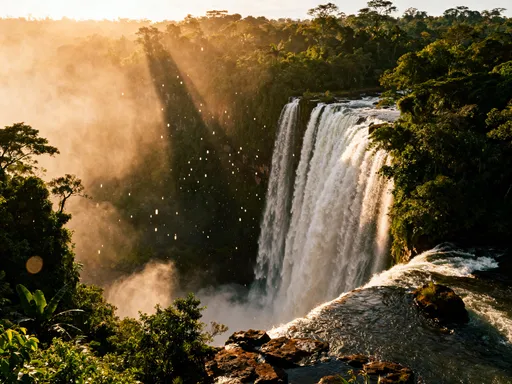
Arriving on the Brazilian side of Iguazu Falls, visitors are met with a sensory wave so intense it borders on overwhelming. Even before catching sight of the falls, the sound arrives—deep, thunderous, unrelenting. It grows louder with every step along the paved boardwalk that winds through the emerald canopy of the Atlantic rainforest. Then, suddenly, the trees part, and there it is: a vast, white-laced curtain of water stretching nearly 2.7 kilometers across the horizon. This is not a single drop but a symphony of cascades, each one carving its path through ancient rock, plunging up to 82 meters into the churning river below. The mist rises like breath from the earth, cooling the skin and dampening clothes long before any rain begins.
The centerpiece of this panoramic spectacle is the Devil’s Throat—a U-shaped chasm where the most powerful currents converge and vanish into a frothing abyss. Standing on the final viewing platform that extends over the void, one feels both awe and a primal sense of humility. The vibration of the falling water resonates in the chest, and the sheer volume of liquid in motion defies comprehension. Over 1,700 cubic meters of water per second can surge through this natural funnel during peak flow, a force that no photograph or video can fully capture. Cameras record the scene, but they cannot translate the humidity on the face, the roar in the ears, or the way the sunlight fractures through the spray to form fleeting rainbows.
What makes this first encounter so transformative is its immediacy. Unlike distant mountain vistas or quiet lakes, Iguazu demands participation. You do not observe it from afar; you step into its world. The boardwalk system, carefully engineered to minimize environmental impact while maximizing access, guides visitors through a sequence of revelations. Each turn offers a new perspective, a different angle on the same overwhelming power. Families pause to point, photographers adjust their lenses, and solo travelers stand in silence—each responding in their own way to nature’s grandeur. This is not merely sightseeing; it is an immersion in raw planetary energy.
Choosing Your Side: Brazil vs. Argentina – A Practical Breakdown
To truly understand Iguazu Falls, one must visit both the Brazilian and Argentine sides. Though separated by national borders, the two parks are united by the same river and the same thunderous beauty—but they offer distinctly different experiences. The Brazilian side, located within Iguaçu National Park in the state of Paraná, is renowned for its sweeping panoramas. Here, the landscape opens up, allowing visitors to grasp the full horizontal expanse of the falls. It’s the ideal vantage point for first-time travelers who want to comprehend the scale before diving into closer encounters.
In contrast, the Argentine side, part of Parque Nacional Iguazú in Misiones Province, invites intimacy. Its network of trails leads directly alongside and even beneath some of the most powerful falls, including the famed Garganta del Diablo. This side requires more walking and physical engagement, but it rewards with unparalleled proximity. Visitors can stand just meters from crashing torrents, feel the wind from displaced air, and watch birds glide through the mist as if riding invisible currents. While the Brazilian side answers the question “How big is it?”, the Argentine side asks, “What does it feel like to be inside it?”
Logistically, both sides are accessible from the tri-border city of Foz do Iguaçu in Brazil, which has an international airport with connections to major South American hubs. Travelers entering from Brazil can reach the Brazilian park in under 20 minutes by shuttle or private car. Crossing into Argentina requires a short drive to the border, where standard entry procedures apply—valid passport, tourist visa if required by nationality, and customs declaration. The process is straightforward and well-organized, with bilingual signage and staff to assist. Many visitors choose to stay in Foz do Iguaçu and take day trips to each side, though accommodations are also available near the Argentine entrance.
To do justice to both perspectives, experts recommend allocating at least two full days—one for each side. Rushing through either park risks reducing a profound experience to a checklist. The Brazilian side can be comfortably explored in four to five hours, especially with the use of the electric train that connects the entrance to the main trailhead. The Argentine side demands more time—six to seven hours—to complete the upper and lower circuits and the walk to the Devil’s Throat. Combining both allows travelers to witness the falls under different lighting conditions, at varying crowd levels, and from complementary angles, creating a fuller, richer understanding of this natural wonder.
The main trail on the Brazilian side, known as the Trilha das Cataratas (Trail of the Waterfalls), is a masterclass in accessible ecotourism. Spanning approximately 1.2 kilometers, this paved, wheelchair-accessible path follows the edge of the Iguazu River, leading visitors from the park entrance to the final panoramic viewpoint overlooking the Devil’s Throat. Along the way, a series of well-marked platforms offer increasingly dramatic views, each one revealing more of the falls’ immense breadth. The trail is shaded in parts by native trees, including araucaria pines and figs draped with vines, creating a sense of journey through a living corridor.
One of the most memorable stops is the panoramic balcony—a reinforced concrete platform that juts out over the river just upstream from the main drop. From here, the full sweep of the falls unfolds to the left and right, with dozens of individual cataracts tumbling over basalt cliffs. The view is both majestic and humbling, a reminder of nature’s ability to dwarf human scale. Safety railings are present but unobtrusive, allowing for clear sightlines and unfiltered photography. Interpretive signs in Portuguese, Spanish, and English provide context about the geology, hydrology, and ecological significance of the area, enriching the experience without disrupting the sense of immersion.
While the trail is designed for ease of access, preparation remains essential. The constant spray from the falls means that visitors will get wet—even those who stay on designated paths. Light rain jackets or ponchos are advisable, though they offer limited protection against the wind-driven mist. Quick-dry clothing is highly recommended, as damp fabric can become uncomfortable over time. Electronics should be stored in waterproof cases or sealed plastic bags, as the humidity is relentless. For those with mobility concerns, the electric train service eliminates the need to walk the entire return route, making the experience inclusive for a wide range of travelers.
The best time to walk the Trilha das Cataratas is early in the morning, shortly after the park opens. Arriving at or before 9 a.m. allows visitors to avoid the midday heat, the peak of tourist arrivals, and the strongest sun glare on the water. On clear mornings, rainbows often arch across the falls, adding a touch of magic to the already surreal scene. Midday brings larger crowds and higher temperatures, while late afternoon offers softer light and fewer people, though some viewpoints may be backlit. Regardless of timing, the trail delivers a powerful introduction to Iguazu—one that prepares the spirit for the deeper explorations ahead.
Into the Mist: The Argentine Adventure Awaits
If the Brazilian side offers the grand overture, the Argentine side delivers the full symphonic movement. Here, the experience shifts from observation to participation. The heart of the Argentine park is the Garganta del Diablo walkway—a narrow steel bridge that extends directly over the roaring chasm where the Iguazu River funnels into the most powerful section of the falls. As visitors approach, the noise intensifies, the ground trembles slightly, and the air thickens with mist. By the time they reach the final platform, many are already drenched, not from rain, but from the explosive spray generated by millions of liters of water crashing below.
The walk to the Devil’s Throat begins with a ride on the park’s ecological train, which transports guests from the visitor center to the trailhead. From there, a paved path winds through dense vegetation, crossing smaller tributaries on wooden bridges. Along the way, the sound builds gradually, like a crescendo in music. When the first glimpse of the chasm appears through the trees, the effect is visceral. The bridge itself is engineered to withstand extreme conditions, but its slight sway underfoot adds to the sense of adventure. Railings are secure, and park staff monitor the path closely, especially during high-water periods when access may be temporarily restricted for safety.
Equally compelling are the lower and upper circuits, which allow visitors to explore the falls from multiple levels. The lower circuit follows a looping trail along the base of the cataracts, bringing travelers face-to-face with falls like Bossetti and San Martín. The path is constructed of concrete and metal grating, elevated in places to prevent flooding. It’s here that the power of the water becomes tangible—the wind it generates can nearly knock a person off balance, and the mist soaks clothing within minutes. The upper circuit, meanwhile, runs along the top of the riverbank, offering bird’s-eye views of smaller falls and rapids. Though less dramatic than the Devil’s Throat, it provides a more tranquil perspective, ideal for photography and quiet reflection.
For the truly adventurous, the park offers a boat ride operated by Macuco Safari—a guided expedition that takes passengers deep into the river system and directly beneath some of the falls. The journey begins with a jungle trek, followed by a motorized raft ride that navigates narrow channels flanked by overhanging trees. When the boat approaches the base of a cascade, the captain revs the engine and plunges into the foam, drenching everyone on board in a heart-pounding finale. Participants are provided with waterproof ponchos and life jackets, but full immersion is expected and embraced. This experience is not for the faint of heart, but for those who seek to feel Iguazu in every sense, it is unforgettable.
Beyond the Falls: The Rainforest as a Living World
Iguazu Falls does not exist in isolation. It is the crown jewel of a much larger ecosystem—the Atlantic Forest, one of the most biodiverse regions on Earth. This biome, which once covered much of eastern South America, now survives in fragmented pockets, with the parks surrounding Iguazu serving as critical refuges. Within these protected areas, life thrives in astonishing variety. Howler monkeys announce their presence with deep, guttural calls that echo through the trees at dawn and dusk. Colorful toucans flash their oversized bills among the canopy, while coatis—curious, raccoon-like mammals—wander the trails in search of fruit and insects.
The integration of conservation and tourism is evident throughout both parks. Elevated walkways minimize soil compaction and protect root systems, while clearly marked trails prevent visitors from straying into sensitive habitats. Wildlife signage, written in multiple languages, educates guests about native species and the importance of preservation. Rangers patrol regularly, ensuring that rules are followed and offering insights to curious travelers. Some areas are closed seasonally to allow animals to breed undisturbed, reflecting a commitment to long-term ecological health over short-term visitor access.
For travelers, this means that a visit to Iguazu is not just about water and rock, but about connection with a living, breathing world. Pausing on a quiet stretch of trail, one might hear the rustle of leaves as a lizard darts across the path, or spot the iridescent wings of a morpho butterfly catching the sun. Birdwatchers can identify species like the swallow-tailed kite or the black-capped tyrannulet, while plant enthusiasts marvel at bromeliads clinging to branches and orchids blooming in hidden clearings. The rainforest is not a backdrop—it is a co-star in the Iguazu experience.
Slowing down enhances this connection. Rather than rushing from viewpoint to viewpoint, travelers are encouraged to linger, listen, and observe. Sitting quietly on a bench, one begins to notice patterns—the flight paths of birds, the movement of insects, the way light shifts through the trees as clouds pass. This mindfulness transforms a sightseeing trip into a deeper engagement with nature. It also fosters respect: when people see animals in their natural habitat, they are less likely to disturb them or leave waste behind. The forest teaches its own lessons, quietly and without words.
When to Go and What to Pack: Timing Your Visit Right
Timing is a crucial factor in shaping the Iguazu experience. The region has a subtropical climate, with distinct wet and dry seasons that affect water volume, visibility, and crowd levels. The wet season, from November to March, brings heavy rainfall and peak river flow. During this period, the falls are at their most powerful, with maximum volume and dramatic spray. However, paths can become slippery, boat tours may be suspended for safety, and humidity levels make physical activity more taxing. Afternoon thunderstorms are common, so waterproof gear is essential.
The dry season, from April to October, offers more stable weather and clearer skies. While water volume is lower, visibility is often better, and the trails are safer underfoot. This period also coincides with the most comfortable temperatures, especially in the southern hemisphere’s autumn (March to May) and spring (August to October). These months are widely considered the best time to visit, balancing strong water flow with pleasant conditions and manageable crowds. July, though cooler, can be busy due to regional holidays, so advance booking is advisable.
Daily timing also matters. Arriving at park opening—typically around 8 or 9 a.m.—allows visitors to beat the heat and the crowds. Mornings often bring softer light, ideal for photography, and increased chances of spotting wildlife active at dawn. Midday brings higher temperatures and larger groups, while late afternoon offers golden-hour lighting, though some viewpoints may be less favorable due to backlighting. Sunset views are possible but limited, as the dense forest canopy blocks direct sun in many areas.
Packing appropriately ensures comfort and safety. A lightweight, waterproof jacket or poncho is non-negotiable. Quick-dry clothing helps manage constant moisture, while sturdy, closed-toe shoes with good grip prevent slips on wet surfaces. Insect repellent is essential, particularly in warmer months when mosquitoes are active. Sun protection—hat, sunglasses, and sunscreen—should not be overlooked, even on cloudy days. Hydration is critical; visitors should carry at least one liter of water per person. A sealed bag for electronics, a small backpack, and a reusable water bottle complete the essentials. Avoid cotton clothing, which retains moisture, and leave valuables behind when taking boat rides.
Making It Meaningful: Traveling with Respect and Wonder
A journey to Iguazu Falls is more than a vacation—it is an encounter with one of Earth’s most awe-inspiring natural spectacles. To honor this experience, travelers are called to move beyond passive observation and embrace a mindset of respect and stewardship. Staying on marked trails protects fragile vegetation and prevents erosion. Avoiding litter, especially plastics, safeguards wildlife and preserves the park’s pristine beauty. Feeding animals, though tempting, disrupts natural behaviors and can lead to dependency or aggression. These simple acts of care ensure that future generations will also have the chance to stand before the Devil’s Throat and feel the thunder in their bones.
Supporting local guides and community-run services deepens the experience while contributing to sustainable tourism. Knowledgeable guides enhance understanding of the ecosystem, sharing stories about the Guarani people, the region’s original inhabitants, and their cultural connection to the falls. Purchasing crafts or dining at locally owned restaurants helps circulate tourism dollars within the community, promoting economic resilience. Ethical travel is not about sacrifice—it is about alignment, choosing actions that reflect appreciation rather than exploitation.
Ultimately, Iguazu invites a shift in perspective. It challenges the modern rhythm of haste and distraction, urging visitors to pause, breathe, and reconnect with the raw pulse of the planet. In a world increasingly shaped by human design, places like Iguazu remind us of nature’s sovereignty. They do not exist for our entertainment; they tolerate our presence, offering glimpses of their power only to those who approach with humility.
So prepare well—research, pack thoughtfully, and plan your days with intention. But also come ready to be changed. Let the mist soak your skin, let the roar fill your ears, and let the sight of so much untamed water stir something deep within. Iguazu is not a destination to be conquered, but a presence to be felt. And when you leave, you won’t just carry photos—you’ll carry a renewed sense of wonder, a quiet reverence, and the unshakable memory of standing before something greater than yourself.