Phuket's Hidden Architectural Traps – What No One Tells You
You know what? Phuket isn’t just beaches and parties. I went chasing those Instagram-perfect temple shots and quirky Sino-Portuguese streets, but ended up tripping over architectural illusions – flashy, fake, or poorly preserved buildings hiding behind tourist hype. The island’s real charm? It’s buried under rushed renovations and mismatched designs. This is not your typical travel warning – this is a deep dive into what Phuket’s buildings really say about its soul. Beyond the glossy brochures and filtered photos lies a quieter, more complex story: one of cultural erosion masked by cosmetic charm. As tourism booms, so does the pressure to present a polished image, often at the expense of authenticity. This article peels back the painted facades to reveal what thoughtful travelers should see, understand, and protect.
First Impressions: When Beauty Masks the Flaws
Arriving in Phuket, the sensory experience is immediate—vibrant colors, intricate carvings, and a blend of architectural styles that hint at a layered history. The mix of Thai, Chinese, and colonial influences creates a visual tapestry that seems rich and authentic. In Phuket Town, rows of shophouses with arched windows and ornate gables line the streets, while coastal roads are dotted with grand resorts promising luxury and tradition. Yet, a closer look reveals a troubling trend: much of what appears historic is, in fact, either poorly maintained or entirely fabricated. The charm is often skin-deep, sustained by synthetic materials that crack and fade under the relentless tropical sun.
Many buildings marketed as heritage sites have undergone renovations that prioritize speed over integrity. Original wooden beams and lime-plastered walls have been replaced with concrete, plastic trims, and spray-painted finishes. These materials, while cheaper and faster to install, lack durability and cultural accuracy. Within just a few years, paint peels, joints weaken, and the illusion of authenticity collapses. Worse, some structures labeled as centuries-old are actually recent constructions designed solely for tourism. These replicas may mimic the shape of traditional buildings, but they lack soul, craftsmanship, and historical continuity. The danger lies in their ability to mislead—travelers believe they are witnessing living history when they are, in fact, observing themed decor.
This erosion of architectural truth affects more than aesthetics; it undermines the island’s cultural narrative. When buildings are treated as disposable backdrops for photographs rather than as vessels of heritage, the deeper stories they carry—of migration, trade, faith, and community—are lost. Families who once lived and worked in these shophouses have been displaced by souvenir shops and cafes catering to foreign tastes. The rhythm of daily life, once centered around family businesses and neighborhood temples, is being replaced by a performance of culture for visitors. The result is a cityscape that looks lively but feels hollow—a museum exhibit without context.
The solution is not to reject modernization, but to integrate it with respect. Restoration should not mean erasing the past to fit a commercial ideal. Instead, it should involve skilled artisans, traditional techniques, and community input. Some local groups have begun advocating for such approaches, pushing for stricter guidelines on what qualifies as a heritage building. By supporting these efforts, travelers can help ensure that Phuket’s architecture remains a true reflection of its people, not just a stage set for tourism.
The Sino-Portuguese Facade Problem
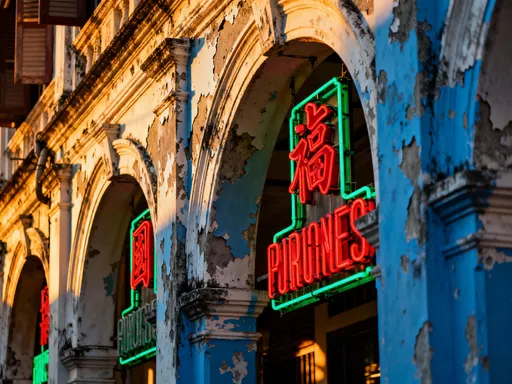
The heart of Phuket Town, particularly along Thalang Road and Soi Romanee, is celebrated for its Sino-Portuguese architecture—a unique fusion born from 19th-century tin trade prosperity. These buildings, with their tall shuttered windows, arched doorways, and decorative stucco, were once homes and offices for wealthy Chinese merchants. Today, they are among the island’s most photographed landmarks. But beneath the charm lies a growing crisis: the gradual disappearance of authentic structures. Over the past two decades, dozens of original buildings have been demolished or altered beyond recognition, replaced by modern constructions that mimic the style without honoring its substance.
One of the most visible issues is the replacement of original materials. Traditional Sino-Portuguese buildings used hardwood frames, lime-based plaster, and hand-carved details that allowed structures to breathe in the humid climate. Now, many facades are built with concrete, synthetic stucco, and plastic moldings that trap moisture and deteriorate quickly. Worse, some owners repaint their buildings in bright, unnatural colors—hot pink, electric blue, lime green—just to attract social media attention. These choices clash with the historically accurate palette of soft ochres, greens, and creams that once defined the streetscape. The result is a carnival-like atmosphere that distracts from the area’s genuine heritage.
Inside these buildings, the transformation continues. Once family-run businesses or homes, many now house generic souvenir shops, massage parlors, or international chain cafes. The ground-floor openings, originally designed for ventilation and social interaction, are sealed off with glass and air conditioning units. Wooden shutters are fixed in place, no longer functional but merely decorative. The rhythm of life that once animated these spaces—children playing in doorways, elders chatting on benches, merchants calling out goods—has faded. In its place is a quiet commercialism, where the building serves not the community, but the camera.
The loss of authenticity is not just a local concern; it affects how visitors experience the island. Tourists come seeking culture, but often leave with nothing more than a collection of photos in front of colorful walls. Without context, they cannot appreciate the craftsmanship, history, or daily life that once defined these neighborhoods. Some local historians and architects have responded by launching educational tours and documentation projects, aiming to preserve knowledge before it vanishes. By supporting these initiatives—whether through participation or respectful observation—travelers can help shift the focus from appearance to meaning.
Temple Tourism and Architectural Inflation
Phuket’s temples, or wats, are among its most revered sites. Wat Chalong, the island’s largest and most visited, draws thousands each year with its golden chedi, intricate murals, and serene courtyards. The architecture of these religious spaces is deeply symbolic—every curve of the roof, every naga serpent guarding the stairs, every lotus motif carries spiritual significance. Yet, the very popularity that sustains these temples also threatens their authenticity. As visitor numbers rise, so does the pressure to maintain and expand facilities, often leading to over-renovation that compromises both artistry and sanctity.
Many temple halls that once featured hand-carved teak woodwork have been rebuilt using concrete and steel, materials that are cheaper and faster to work with but lack the warmth and durability of traditional wood. Murals, originally painted by skilled artists using natural pigments, are now often repainted by workers with limited training, resulting in simplified, less expressive versions. In some cases, entire sections of a temple are reconstructed without consulting religious elders or art historians, leading to designs that are visually jarring or spiritually inaccurate. The goal, increasingly, seems to be visual impact rather than reverence.
Devotees and monks have expressed concern that the spiritual atmosphere of these spaces is diminishing. When maintenance decisions are driven by tourism metrics—how many people can be accommodated, how photogenic the site appears—the sacred function of the temple is overshadowed. Air conditioning units hum beneath ancient statues, gift shops occupy former meditation halls, and loudspeakers broadcast announcements in multiple languages. While these changes improve accessibility, they also fragment the sense of peace and continuity that once defined temple life.
The challenge is to balance preservation with practicality. Some temples have begun working with cultural experts to guide restoration, ensuring that new work aligns with traditional techniques and religious principles. Others have introduced visitor education programs, explaining the meaning behind architectural elements and encouraging respectful behavior. These efforts show that it is possible to welcome tourists without sacrificing authenticity. Travelers can support this balance by visiting during quieter hours, dressing modestly, and refraining from treating temple grounds as photo studios. A moment of silence, a small offering, or a quiet walk through the garden can be more meaningful than a hundred filtered images.
Resort Architecture: Luxury vs. Local Identity
Along Phuket’s western coast, from Patong to Kata, the skyline tells a story of transformation. Towering glass hotels, infinity pools, and manicured lawns dominate the view, offering comfort and convenience to millions of visitors. These resorts promise a blend of luxury and Thai culture, often incorporating so-called “traditional” elements like steeply pitched roofs, carved wood panels, or temple-style spires. But upon closer inspection, these features are frequently superficial—applied like costumes rather than integrated into the design. The result is an architectural disconnect, where global aesthetics override local identity.
Many of these resorts ignore the principles that once shaped Thai architecture. Traditional homes and public buildings were designed with the climate in mind: raised floors for ventilation, wide eaves for shade, open layouts to capture sea breezes. Modern resorts, by contrast, rely heavily on air conditioning, sealed windows, and artificial lighting, creating energy-intensive environments that feel isolated from their surroundings. The use of imported materials—Italian marble, German glass, Chinese steel—further distances these structures from the local landscape. Even when “Thai-style” details are included, they are often generic, borrowed from northern or central Thailand without regard for Phuket’s unique cultural context.
This architectural homogenization has consequences beyond aesthetics. It erases the island’s visual identity, making one beachfront look nearly identical to another, whether in Phuket, Bali, or the Maldives. It also displaces local businesses and workers, as international chains prioritize foreign management and imported goods. Small guesthouses, family-run restaurants, and craft shops struggle to compete, leading to a loss of community character. The beach, once a shared public space, becomes a privatized luxury zone accessible only to guests.
Yet, alternatives exist. A growing number of boutique resorts and eco-lodges are rethinking design, using local materials, traditional craftsmanship, and climate-responsive layouts. Some incorporate rainwater harvesting, solar energy, and native landscaping to reduce environmental impact. These projects prove that luxury and authenticity can coexist. Travelers can support this shift by choosing accommodations that prioritize sustainability and cultural integrity. Staying in a restored shophouse guesthouse, for example, offers not just comfort but connection—a chance to sleep within history, not just beside it.
Urban Sprawl and Lost Planning Control
As tourism has expanded, so has Phuket’s urban footprint. Areas once dominated by rubber plantations, fishing villages, and small farms—like Rawai, Chalong, and Mai Khao—have transformed into mixed-use zones with little coherent planning. Residential homes sit beside high-rise hotels, convenience stores, and parking lots. Building heights vary wildly, with no consistent scale or setback, creating a cluttered, chaotic streetscape. Roads have been widened to accommodate traffic, but drainage systems have not kept pace, leading to frequent flooding during the rainy season. This lack of coordinated development undermines both livability and resilience.
One of the most pressing issues is the absence of enforceable zoning laws. Unlike cities with clear design guidelines, Phuket has struggled to regulate construction in a way that preserves neighborhood character. Developers often build to the edge of their plots, blocking light and airflow for neighboring properties. In some cases, historic trees and natural drainage paths are removed to make way for concrete foundations, worsening environmental strain. The cumulative effect is a landscape that feels improvised rather than planned—a patchwork of competing interests with no unifying vision.
This disorganization also affects daily life for residents. Noise, traffic congestion, and pollution have increased, making some areas less desirable to live in. Local markets and community spaces are being replaced by commercial developments, weakening social ties. Emergency services face challenges navigating narrow, congested roads, and waste management systems are overburdened. The island’s infrastructure, designed for a much smaller population, is now stretched beyond capacity.
The solution lies in integrated urban planning that balances growth with sustainability. Some local officials and urban designers have proposed zoning reforms, green building standards, and public transportation improvements. Community consultations have begun in select areas, allowing residents to voice concerns and contribute ideas. These efforts, though still limited, represent a shift toward more thoughtful development. Travelers can support this movement by choosing to explore beyond the main tourist zones, visiting local markets, and respecting residential neighborhoods as living spaces, not just backdrops.
The Good News: Where Authenticity Still Stands
Despite these challenges, pockets of genuine heritage remain. In neighborhoods like Krabi Road and the quieter lanes of Old Phuket Town, original buildings still stand, preserved through care and community effort. Some families have maintained their ancestral homes, using traditional materials like lime plaster and reclaimed teak to repair rather than replace. These homes breathe with the climate, age gracefully, and tell stories through their wear and craftsmanship. They are not frozen in time, but living spaces that adapt without losing their essence.
Community-led initiatives have played a crucial role in this preservation. Groups like the Phuket Old Town Community Group and the Thai Heritage Conservation Institute offer workshops on traditional building techniques, connect homeowners with skilled artisans, and advocate for policy changes. Projects such as the Phuket Heritage Trail provide guided walks that highlight authentic architecture, explain historical context, and support local guides. These efforts not only protect buildings but also strengthen cultural pride and intergenerational knowledge.
Some private owners have also taken responsible approaches. Heritage guesthouses, like those restored by local architects using archival research, offer visitors a chance to experience authentic design firsthand. These accommodations often feature high ceilings, natural ventilation, and handcrafted details, creating a more immersive and comfortable stay. By choosing such places, travelers directly support preservation and demonstrate that authenticity has value.
The survival of these spaces proves that change does not have to mean erasure. With care, resources, and respect, Phuket’s architectural soul can endure. The key is recognizing that preservation is not about stopping progress, but about guiding it wisely. Every brick laid, every beam restored, every decision made with intention contributes to a future where beauty and truth coexist.
Traveling with Awareness: How to See Beyond the Surface
The future of Phuket’s architecture depends not only on builders and planners but on travelers themselves. Every visit, every choice, sends a message about what is valued. When tourists prioritize photo opportunities over understanding, they encourage superficial restoration. When they choose chain resorts over local guesthouses, they support homogenization. But when they engage with history, ask questions, and support authentic experiences, they become allies in preservation.
There are simple ways to travel more thoughtfully. Opt for guided heritage walks led by local historians rather than quick photo stops. Visit temples during morning alms or evening chanting to witness living traditions. Shop at family-run craft stores instead of mass-market souvenir shops. Stay in accommodations that use local materials and employ community members. These choices may seem small, but collectively, they shape demand and influence development.
Education is equally important. Before visiting, learn about Phuket’s history, architectural styles, and cultural values. During your stay, observe not just the beauty of a building, but its materials, proportions, and relationship to its surroundings. Ask questions: Was this building restored with traditional methods? Who lived here before? What stories does it hold? These inquiries, even if unanswered, foster a mindset of respect and curiosity.
Finally, share what you learn. When you post a photo, add context. Instead of just #BeautifulPhuket, try #SinoPortugueseHeritage or #TraditionalThaiArchitecture. Recommend authentic places to friends. Your voice can help shift the narrative from consumption to connection. Phuket’s architecture is more than a backdrop—it is a living record of resilience, creativity, and identity. By seeing it clearly, protecting it gently, and sharing it wisely, we ensure that its true beauty endures for generations to come.