You Won’t Believe What Slow Travel in Olympia, Greece Reveals About Nature
Olympia, Greece, is more than ancient ruins and history books—it’s a hidden world of quiet rivers, olive groves, and mountain breezes waiting to be felt, not rushed. I went not to check landmarks off a list, but to breathe. What I found was unexpected: nature and history living side by side in perfect harmony. This is slow travel at its purest—where every step tells a story, and silence speaks louder than crowds. The moment I stepped off the regional bus, with no tour guide’s flag in sight, I knew this would be different. The air smelled of wild thyme and damp earth. A soft wind moved through centuries-old olive trees just beyond the roadside. I wasn’t here to photograph columns or tick off UNESCO sites. I was here to listen, to walk without urgency, and to feel how the land itself remembers.
The Myth and the Mistake
Every year, thousands of visitors descend on Olympia with a single purpose: to see where the Olympic Games began. They arrive in large tour groups, follow a well-worn path through the archaeological site, snap photos of the Temple of Zeus and the ancient stadium, and depart within three hours. While their intentions are understandable, this approach overlooks a profound truth—the sacredness of Olympia was never confined to stone and mortar. The ancient Greeks did not separate the divine from the natural world. For them, the groves, rivers, and hills were not scenic backdrops but essential elements of spiritual life. The Altis, the sacred precinct at the heart of the sanctuary, was originally a living forest, consecrated to the gods. Cypresses, oaks, and wild olives stood where tourists now walk on paved paths.
By rushing through the site, modern travelers miss the deeper rhythm of the place. They see history as something static, preserved behind ropes and information panels, rather than as a living presence shaped by time, weather, and the enduring pulse of nature. The mistake lies in treating Olympia as a museum rather than a landscape of memory and meaning. When you slow down, you begin to notice how sunlight slants across the ruins in the late afternoon, how birds nest in the crevices of ancient walls, how the wind carries the scent of pine from the nearby hills. These are not distractions—they are part of the story. The true heritage of Olympia is not only in what was built, but in how it was experienced: as a place where earth and spirit met.
Arrival with Intention
I arrived in Olympia by regional bus from Pyrgos, a quiet town along the Ionian coast. There were no announcements, no waiting crowd—just a local driver who nodded as I stepped off near the edge of the village. My destination was a small guesthouse run by a family who has lived in the region for generations. Tucked behind a row of cypress trees, the stone building had a terrace that overlooked the Alfeios River valley. The first morning, I woke to the sound of goats and the smell of fresh bread. Breakfast was simple: yogurt drizzled with golden honey, figs from the garden, and strong Greek coffee served in small cups. There was no Wi-Fi in the common area—by design. The owners believed that real connection begins when digital noise fades.
This deliberate way of arriving shaped the entire journey. Without a packed itinerary or a checklist of sights, I was free to move at the pace of the land. I didn’t come to Olympia to conquer it, but to become part of it, even briefly. Choosing low-impact transportation, staying in eco-conscious lodging, and avoiding the rush of mass tourism allowed me to engage more deeply. I noticed things others might overlook: the pattern of shadows on the stone steps at dawn, the way bees hovered over wildflowers near the ruins, the quiet conversations between local farmers at the morning market. Intentional arrival isn’t about luxury or convenience—it’s about presence. It’s the decision to enter a place not as a consumer of experiences, but as a guest.
The Altis, once the most revered sanctuary in the Greek world, was more than a collection of temples and altars. It was a living grove, planted and protected as a gift to the gods. Today, though many of the original trees are gone, the space still holds a hushed, reverent quality. I visited each morning and again at dusk, when the crowds had left and the golden light softened the edges of the ruins. Walking slowly along the ancient paths, I paid attention not just to what was built, but to what grew. Cypress trees still stand in clusters, their dark green crowns reaching skyward. Wildflowers bloom between the stones—yellow daisies, purple thistles, and delicate white chamomile. The air is cool under the canopy, even in midsummer.
Each visit revealed something new. One morning, I watched a kestrel hover above the Temple of Hera, then dive into the tall grass beyond the stadium. Another evening, I sat near the remains of the sacred altar and listened to the rustling of leaves, the distant call of a nightingale. There were no signs explaining these moments, no audio guides narrating their significance. Yet they felt deeply meaningful. The ancients believed that gods walked in groves and spoke through the wind. Whether or not one believes in deities, it’s impossible to ignore the spiritual atmosphere that lingers here. Nature wasn’t just respected in Olympia—it was revered. To walk the Altis slowly is to understand that some spaces are sacred not because of what humans built, but because of how nature shaped the human soul.
The Alfeios River: Lifeblood of the Valley
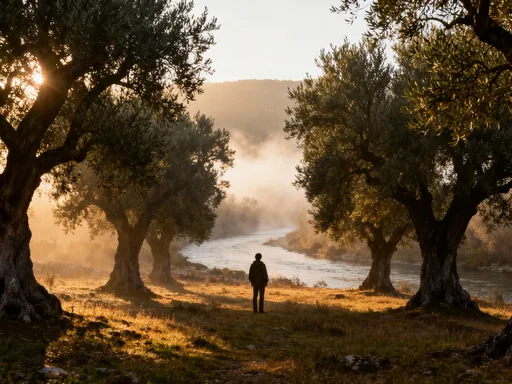
Just beyond the edge of the archaeological site, the Alfeios River flows with a quiet, steady grace. It is the longest river in the Peloponnese, winding through valleys and forests before reaching the Ionian Sea. Yet most tourists pass it without a glance, focused instead on the ruins. I spent an entire afternoon on its banks, sitting on smooth, sun-warmed stones, watching the water ripple over pebbles. Dragonflies skimmed the surface, their wings catching the light like tiny prisms. Willows dipped their branches into the current, and herons stood motionless in the shallows, waiting for fish.
In ancient times, the Alfeios was more than a water source—it was a sacred boundary, a symbol of life and continuity. Rituals were performed on its banks, and athletes purified themselves in its waters before competing. Even today, the river supports a rich ecosystem. Frogs croak in the reeds, otters leave tracks in the mud, and native fish swim in the deeper pools. But what struck me most was the stillness it invited. I brought no book, no music, no device. I simply sat and observed. The act of being present, of listening to the rhythm of the water, became a form of meditation. No grand gesture, no special technique—just sitting, breathing, and letting the river’s quiet energy restore a sense of balance. In a world that prizes constant movement, the Alfeios teaches the power of flow without haste.
Hidden Trails Beyond the Site
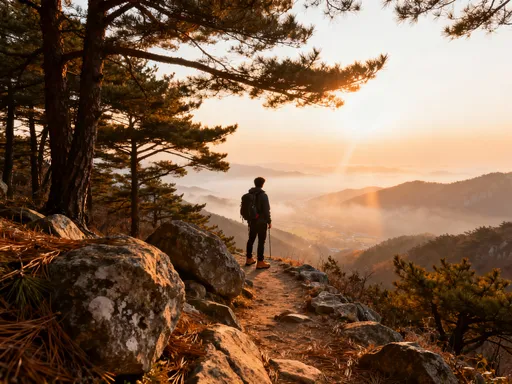
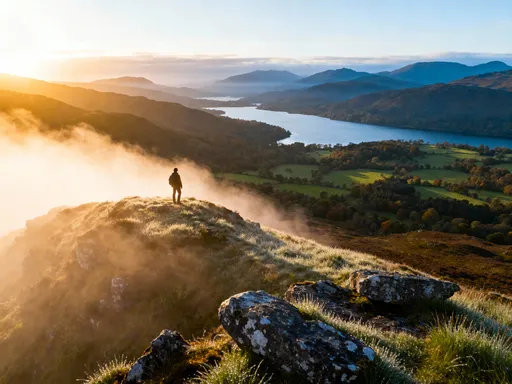
Just outside the official archaeological park, a network of dirt paths winds through olive groves and up gentle hills. These are not marked on tourist maps, nor maintained for visitors. They are the routes used by shepherds, farmers, and locals who know the land intimately. One morning, I followed a narrow trail at dawn, guided only by the sound of goat bells in the distance. The air was cool, and mist clung to the valley floor like smoke. As I climbed, the path opened to a clearing, and suddenly, the entire Olympia basin unfolded below—ancient ruins nestled in green, the Alfeios snaking through the landscape, and the mountains of Arcadia rising in the distance.
This was not a view available from any official viewpoint. It was earned through patience and curiosity. I sat on a flat rock and watched as the sun burned off the mist, revealing fields of wildflowers and distant farmhouses with red-tiled roofs. I brought only water, a light jacket, and a small notebook. I left no trace. These hidden trails are not about adventure or conquest—they are about discovery. They remind us that some of the most powerful experiences in travel come not from what is advertised, but from what is uncovered. The best moments often happen when you allow yourself to get slightly lost, to follow a path without knowing where it leads. In doing so, you surrender control and open yourself to surprise.
Nature as a Lens for History
When you move slowly through Olympia, patterns begin to emerge. You start to see how the placement of temples aligns with the flow of the river, how the stone used in construction was quarried from nearby hills, how the orientation of buildings follows the path of the sun. These are not coincidences—they are reflections of a worldview in which humans lived in harmony with their environment. The ancient Greeks did not dominate nature; they adapted to it, celebrated it, and drew meaning from it. The Olympic Games themselves were timed to coincide with the full moon of summer, a period of natural abundance and celestial clarity.
By observing the land closely, you gain insight into the rhythms of ancient life. The olive trees, some of which may be centuries old, were not just sources of oil—they were symbols of peace and victory. Laurel wreaths, awarded to champions, were made from wild bay leaves gathered in the surrounding hills. Even the stadium was built into the natural slope of the land, using the earth itself as seating. These details are easy to miss when rushing from site to site. But when you slow down, history stops being a list of facts and becomes a lived experience. You begin to understand that the people who built Olympia did not see themselves as separate from nature. They were part of it—shaped by its seasons, sustained by its gifts, and humbled by its power.
Why Slow Travel Matters Here—And Beyond
Olympia is not a place that reveals itself quickly. Its secrets are not found in guidebooks or audio tours, but in the quiet moments between steps, in the way light falls on an old stone, in the sound of wind through leaves that have stood for centuries. This is the essence of slow travel—not just moving at a leisurely pace, but opening yourself to deeper connection. It’s about trading efficiency for meaning, spectacle for stillness, and consumption for contemplation.
My time in Olympia changed the way I think about travel. I no longer measure a journey by how many sites I’ve seen, but by how deeply I’ve felt. I’ve learned that true discovery requires patience, presence, and a willingness to be transformed. The lessons of Olympia extend far beyond Greece. They apply to any place touched by history and nature—mountains, forests, coastal villages, ancient towns. Wherever you go, the same principle holds: the more you slow down, the more you see.
In a world that glorifies speed and productivity, choosing to travel slowly is a quiet act of resistance. It says that some things cannot be rushed, that beauty unfolds in its own time, and that the deepest experiences come not from doing, but from being. Olympia, with its whispering groves and timeless river, reminds us that the past is not dead—it lives in the land, in the trees, in the air we breathe. All we need to do is slow down, listen, and let it speak.